

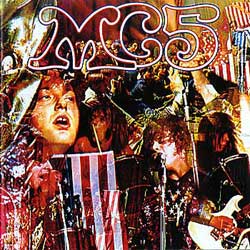
"MC5 was punk before punk, heavy metal before heavy metal and MC before Hammer." In case somebody remembers the one-hit hip hop wonder MC Hammer, this ancient joke still holds true. But unlike their toolish namesake, MC5's career went the opposite way: from bottom to top. At the start of the noughties this group of five from Detroit is in the news more than ever. They've got albums available at the shops, a documentary film praising their achievements, and thousands of new bands citing them as their biggest inspiration. MC5's influence can indeed be heard here and there, but none of their followers forms such a tight-knit collective as they did. Neither, of course, can any of their followers really copy the original MC5 sound.
Things didn't seem too bright for the Detroit band at the beginning. Their debut album Kick out the Jams never succeeded in the charts. Next, the band told a large record shop chain where to get off, after of which they had to see their album censored, were kicked out of their record company and even had FBI's agents after them. Even on a radical period like the 1960s, MC5 was too radical for some.
Although their original cup of tea in the mid-1960s was garage rock, by 1968 they had adopted the passion of soul, the experimental quality of free jazz, as well as the spirit and zeal of revolutionary speeches that back then were everywhere to be heard. All this was worked on into music that had both the energy and the volumes never heard before. It is telling that MC5's first album was recorded before live audience at Detroit Grande Ballroom in the autumn 1968. The result is a revealing documentary of the band at their sleaziest, unexpected like a tsunami, drowning everything and everyone around. The album is sheer ecstasy on the verge of falling apart right from the guitar storm and falsetto vocals of Ramblin' Rose to the avantgardish Starship.
MC5's momentum faded alongside the storming sixties. The band was too hot for record industry to handle, and when they no longer had White Panther party backing them, they had to listen to constant accusations of having sold out. Their adversaries obviously cared little for the fact that MC5's following two albums were even more political than their debut.
 Back
Back